.png)
Hair Loss Causes and Treatments in Thailand
Hair Loss Causes and Treatments in Thailand
Nobody wants to lose their hair. Whether it's male pattern baldness, stress, or some other cause, baldness is common worldwide. In Thailand, approximately 30% of men experience baldness, making it the Southeast Asian country with the highest percentage of bald men.
Baldness isn’t just a genetic issue. Climate, stress, diet, hormones, and your overall lifestyle can increase your risk of hair loss. Understanding these factors can help mitigate baldness or plan for the future.
Modern hair loss treatments in Thailand can help slow, stabilize, and in many cases visibly reverse thinning and baldness. From clinically proven medications to advanced hair transplant procedures, there are now several effective options available depending on the cause and severity of hair loss. Below, we explore the most common treatments and how they work.
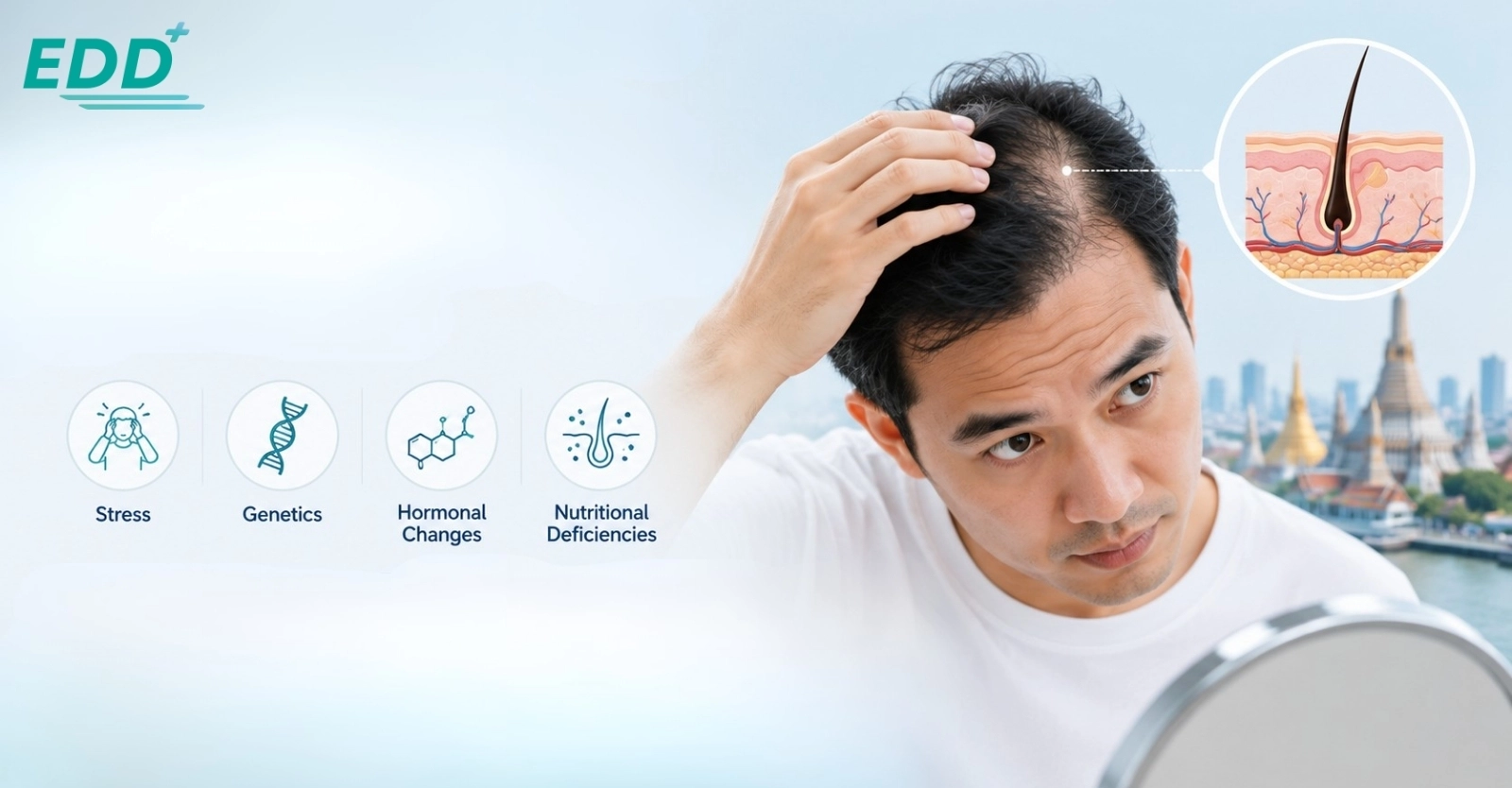
What Causes Hair Loss?
Genetic Hair Loss (Male and Female Pattern Baldness)
Androgenic alopecia is a form of hereditary hair loss. Most commonly known as male or female pattern baldness, it’s characterized by receding hairlines, thinning crowns, and widening part lines.
Hair loss from pattern baldness happens gradually, anywhere between puberty and middle age. In men, it tends to be more severe, leading to the loss of all hair on the top of the head, whereas in women, there is only thinning over the scalp.
Most people with androgenic alopecia have a family history of hair loss.
Stress and Lifestyle Factors
Stress-related hair loss is another common cause. While it doesn’t cause as much hair loss as androgenic alopecia, people may notice thinning hair and excessive shedding.
It can occur due to either physical or emotional stress and is associated with poor sleep or overworking.
Hormonal Imbalances
Hair loss can be a symptom of other conditions. Hormonal problems, for example, can disrupt normal hair production. Examples include thyroid imbalances, polycystic ovarian syndrome (PCOS), and menopause-related thinning.
Pregnancy is well-known to cause excessive hair loss shortly after giving birth. This condition is temporary and usually resolves within a year.
Nutritional Deficiencies
If your body doesn’t get the nutrients it needs to produce more hair, hair loss is inevitable. Most commonly, people can experience hair loss with:
- Iron deficiency
- Low protein intake
- Vitamin D deficiency
- Zinc and biotin deficiencies
Unlike genetic causes, these conditions are normally reversible. Supplementation or a more nutritious diet can increase hair growth, helping repair the damage.
Scalp and Medical Conditions
Disruption to the scalp can affect hair growth. Common causes include:
- Alopecia areata: An autoimmune condition that causes sudden patchy hair loss.
- Fungal infections: Scalp infections that can lead to itching, inflammation, and temporary hair loss.
- Seborrheic dermatitis: A scalp condition causing dandruff, irritation, and increased shedding.
Signs You Should Seek Professional Hair Loss Treatment
Many causes of hair loss can improve or stabilise once the underlying issue is addressed. For example, reducing stress, correcting nutritional deficiencies, or treating medical conditions may help restore hair growth. However, male pattern baldness is the most common cause of hair loss in men and is generally considered progressive. While it cannot usually be completely reversed naturally, treatments may help slow further loss and improve hair density in some individuals.
Typically, the earlier you treat the hair loss, the better. Many modern treatments aim to slow the progression, supporting hair follicles before they inevitably fail. Otherwise, the only option is a full hair transplant.
You should speak to a professional if you notice:
- Sudden shedding
- Bald patches
- Receding hairline
- Increased hair in shower or brush
- Scalp irritation or inflammation
- Hair becoming finer over time
Hair Loss Treatment Options Available in Thailand
Several hair loss treatments are available in Thailand. EDD Health can provide quick access to three evidence-backed medications known to slow the rate of hair loss.
Firide
Firide is one of the main hair loss treatments. The active ingredient finasteride was originally developed to tackle benign prostate issues. However, it was found to help slow hair loss by protecting the hair follicles from damage.
Despite its effectiveness, there are a few risks. Pregnant women should not consume Firide. It may affect PSA readings and should be discussed with a doctor, particularly for men with prostate concerns. Overall, experts say the benefits of finasteride outweigh the risks.
A dermatologist or qualified physician can only prescribe the medication. But you don’t need to wait for a clinic visit. With EDD Health, you can get a quick, discreet, English-speaking consultation online.
Propecia
Propecia is another finasteride-based medication. It works just the same as Firide. While it’s effective at delaying hair loss in men, if discontinued, hair loss can return to pre-treatment levels within 12 months.
Nuhair 5% Minoxidil
Minoxidil is a popular option for delaying hair loss. Unlike finasteride, it’s applied topically to the scalp, naturally increasing blood flow to the area and supporting the hair follicles.
If applied daily, it can stimulate hair growth and inhibit hair follicle shedding. While it won’t completely prevent androgenic alopecia, it’s one of the best treatment options available in Thailand. It can take around 3-4 months of regular use before visible regrowth is noticeable. But you’ll see reduced hair shedding within just 6-8 weeks.
Because minoxidil isn’t a prescription medication, you can purchase it from EDD Health without a consultation. However, an EDD Health physician can recommend a personalized combination plan based on your hair loss pattern and medical history.
Buy Nuhair 5% Minoxidil online
FAQs
What is the best hair loss treatment in Thailand?
The best treatment depends on the cause and severity of hair loss. Medications like minoxidil and finasteride are often used for early thinning, while hair transplants may suit more advanced cases.
How much does a hair transplant cost in Thailand?
Hair transplant costs in Thailand are generally lower than in the UK or US, though pricing varies depending on the clinic, technique, and number of grafts required.
How long does it take to see results from hair loss treatment?
Most hair loss treatments take several months before noticeable improvements appear. Medications typically require consistent treatment over time to achieve the best results.
Can women get hair loss treatment in Thailand?
Yes. Many clinics in Thailand offer treatments specifically for female hair thinning, including medications and personalized treatment plans based on hormonal or nutritional factors.