.png)
Break Free from Anxiety: Proven Techniques to Reclaim Mental Balance
Break Free from Anxiety: Proven Techniques to Reclaim Mental Balance
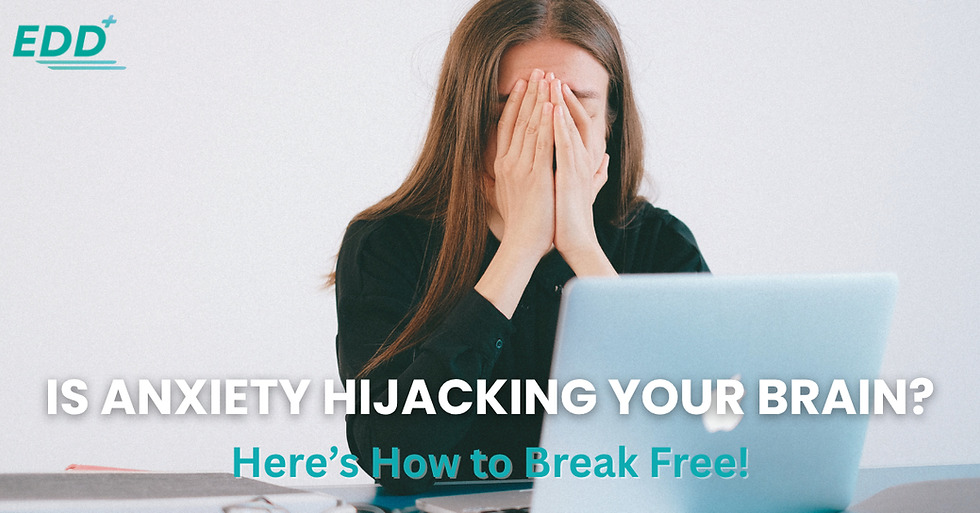
Is Anxiety Hijacking Your Brain? Here’s How to Break Free
We’ve all experienced this: sitting in front of an important task while our thoughts spin wildly, bouncing between endless “what ifs.” This isn’t weakness or lack of willpower — it’s your brain running an outdated survival drill.
The Double-Edged Nature of Anxiety
Anxiety is one of humanity’s most sophisticated early-warning systems. It helps us prepare for danger and stay alert. But in modern life, this ancient system has become oversensitive. The brain often can’t distinguish between “a big presentation tomorrow” and “a life-threatening situation.” Both trigger the same fight-or-flight response.
Living in this constant state of alarm eventually depletes our focus, energy, and emotional balance.
Anxiety
Practical Techniques to Reclaim Mental Control
1. Sensory Anchoring
When your mind starts racing, immediately look for five blue objects around you. This grounds you in the present moment and interrupts the anxiety loop.
2. The Breathing Space Technique
Breathe in through your nose for 4 seconds, hold for 7 seconds, then exhale slowly through your mouth for 8 seconds. This breathing pattern signals your nervous system to calm down, often working within minutes.
3. Make Anxiety Tangible
Write your worries on paper, then rewrite them with your non-dominant hand. The awkward process makes abstract fears concrete and often less intimidating.
Structural Solutions for Workplace Anxiety
Work environments are one of the biggest triggers of anxiety. Instead of battling symptoms, redesign your approach to work:
- Schedule “anxiety time”: Dedicate 15 minutes daily to process worries. Postpone intrusive thoughts until that slot.
- Keep a “done list”: Celebrate completed tasks rather than just tracking to-dos — this gives your brain a sense of progress.
- Create work rituals: Use specific music, scents, or tea to signal the start of focused work and create mental boundaries.
Turning Anxiety into Creative Energy
Your late-night worries may hold untapped potential. Try reframing them:
- Ask: “What is this worry trying to protect me from?”
- Turn it into a practical question: “If I want to prevent the worst-case scenario, what’s the first step?”
- Link each worry to a micro-action, transforming fear into constructive movement.
“mind sweep” by writing down three ordinary moments from your day.
Long-Term Habits to Build Resilience
True anxiety management is not about quick fixes — it’s about training your nervous system over time:
- Expose yourself to natural light in the morning before checking your phone.
- Practice “non-judgmental observation” during your commute — notice details without labeling them.
- Do a nightly “mind sweep” by writing down three ordinary moments from your day.
Anxiety is not an enemy to destroy, but an overzealous alarm system. By adjusting its sensitivity, you can transform it into a tool that sharpens your awareness rather than drains it.
Disclaimer
This article is for informational purposes only and does not substitute medical advice. Please consult a qualified healthcare professional for personal guidance.